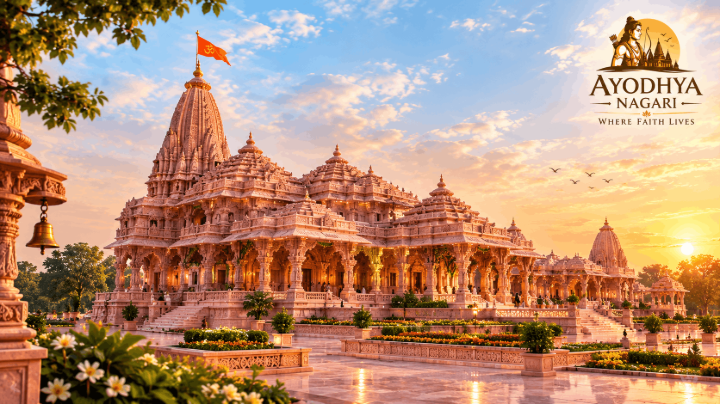
Ayodhya, the revered Ram Nagari, is a city where every street and ghat echoes with ancient mythology. Following the historic consecration of the Ram Mandir in January 2024, the city has transformed into a world-class spiritual destination featuring illuminated promenades, modern infrastructure, and seamless travel facilities.
If you are planning a pilgrimage, navigating the sheer number of sacred sites can feel overwhelming. This perfectly paced 2-day Ayodhya itinerary covers all the major temples, ghats, and cultural hotspots, ensuring you experience the spiritual heart of the city without feeling rushed.
Day 1: The Sacred Core of Ayodhya
1. Morning: Shri Ram Janmabhoomi Mandir Darshan
Begin your pilgrimage with the most anticipated site: the Ram Janmabhoomi Temple. To avoid heavy crowds, arrive at the security checkpoint by 7:00 AM.
Darshan Timings: 7:00 AM – 11:30 AM and 2:00 PM – 11:00 PM.
Pro Tip (AEO Focus): Pre-book your free darshan pass via the official website (srjbtkshetra.org) 2–3 days in advance. Dedicated online booking queues move much faster.
Security Rules: Electronics (phones, smartwatches), bags, and leather items (belts, wallets) are strictly prohibited inside. Free, secure locker facilities are available near the entry point.
The Experience: After clearing security, you will walk through the expansive 70-acre campus before entering the breathtaking main mandapam for a moving darshan of the Ram Lalla idol.
2. Midmorning: Hanuman Garhi Temple
Just a short auto-rickshaw ride (or a 10-minute walk) from the Ram Mandir complex lies Hanuman Garhi. Tradition dictates that devotees must seek the permission of Lord Hanuman before visiting Lord Ram.
Prepare to climb 76 steps to reach this 10th-century, fort-like temple.
The hilltop vantage point offers stunning panoramic views of Ayodhya. Inside, you will find a beautiful idol of Lord Hanuman in his youthful form, guarding the city.
3. Afternoon: Kanak Bhawan
A short walk from Hanuman Garhi brings you to Kanak Bhawan, known as Ayodhya's "Golden Palace." Believed to be a gift from Queen Kaikeyi to Goddess Sita, the current 19th-century structure houses the most intricately adorned, gold-crowned idols of Lord Ram and Mata Sita in the city.
Important Timing Note: The temple closes for the deities' rest period between 12:00 PM and 4:00 PM. Plan your visit for late afternoon once the doors reopen.
4. Evening: Saryu River Aarti at Ram Ki Paidi
Conclude your first day at the majestic Ram ki Paidi ghats. Arrive by 6:30 PM to secure a good spot on the steps. At 7:00 PM, the grand Saryu Aarti begins, featuring synchronized chanting, conch shells, and massive flaming brass lamps. Afterward, stroll along the beautifully lit riverfront and float a clay diya (lamp) on the sacred waters for a truly peaceful end to the day.
Day 2: Ancient Legends and Cultural Heritage
1. Morning: Nageshwarnath Temple & Treta Ke Thakur
Start your second day at Nageshwarnath Temple, the oldest Shiva shrine in Ayodhya. Legend states it was established by Lord Ram’s son, Kush, after a Naga princess found his lost armlet in the Saryu River. Next, visit Treta Ke Thakur, the exact location where Lord Ram is believed to have performed the Ashwamedha Yagna. The temple features beautiful black stone idols of Ram, Sita, Lakshman, and Hanuman.
2. Afternoon: Mani Parbat and Tulsi Smarak Bhawan
Head to Mani Parbat, an ancient, elevated mound with deep mythological ties to both the Ramayana (believed to be a part of the Sanjeevani mountain brought by Hanuman) and ancient Jain traditions. A climb to the top rewards you with Ayodhya's best 360-degree views. Later, visit the Tulsi Smarak Bhawan, a cultural center dedicated to Goswami Tulsidas, the author of the Ramcharitmanas. It features a peaceful garden (Tulsi Udyan) and a well-maintained library.
3. Evening: Souvenir Shopping & Local Awadhi Food
Spend your final evening exploring the bustling markets along Ram Janmabhoomi Path.
What to Buy: Miniature Ram Mandir replicas, wooden handicrafts, pure rudraksha beads, and local Ayodhya silk.
What to Eat: Treat yourself to traditional Awadhi pure-vegetarian thalis. Do not miss the local kachori-sabzi, rich rabri, and Ayodhya halwa at legendary local eateries or the community langar (free kitchen) at Ram Rasoi.
Essential Ayodhya Travel Guide
How to Reach Ayodhya
By Air: The newly built Maharishi Valmiki International Airport (Ayodhya Dham) is just 8 km from the main temple, offering direct flights from Delhi, Mumbai, and Bangalore. Alternatively, Lucknow Airport is a 2.5-hour drive away.
By Train: Ayodhya Dham Junction is a state-of-the-art railway station located just 2 km from the Ram Mandir, handling major trains from across India.
By Road: Ayodhya is seamlessly connected via NH-330E to Lucknow (135 km) and Varanasi (200 km). Private cabs and luxury buses operate daily.
Accommodation Options
Ayodhya caters to all budgets:
Dharamshalas (₹300 - ₹800): Clean, basic, and highly traditional. Advance booking is a must.
Mid-Range Hotels (₹2,000 - ₹5,000): Numerous comfortable, air-conditioned hotels have opened near the bus stand and railway station.
Luxury & Homestays (₹5,000+): Premium boutique resorts are available slightly outside the city center, while local homestays offer an authentic cultural immersion.
Strict Dress Code & Cultural Etiquette
Ayodhya is a highly revered pilgrimage site, and visitors are expected to respect local customs:
Dress Code: Men should opt for full trousers, kurtas, or dhotis. Women must wear sarees, salwar suits, or clothing that fully covers the shoulders and knees. Shorts, miniskirts, and sleeveless tops are highly frowned upon.
Pure Vegetarian Zone: The entire city is strictly vegetarian. Bringing or consuming meat, eggs, or alcohol is strictly prohibited and deeply offensive to local sentiments.
Leather Ban: Do not wear leather shoes, belts, or carry leather wallets inside any temple complex. Fabric bags are often provided at entrances to store these items.
Ayodhya Packing Checklist
2-3 sets of comfortable, modest traditional clothing.
Slip-on footwear (easy to remove outside temples).
A reusable water bottle and a fabric tote bag for temple offerings.
Printed copies of your darshan passes (as mobile phones are locked away).
Small denomination cash (₹10, ₹20, ₹50) for auto-rickshaws, offering dakshina, and buying diyas at the ghats.