What makes the authentic food of Ayodhya so unique?
The authentic food of Ayodhya is defined by pure vegetarian Awadhi heritage, prepared in fragrant desi ghee, freshly pounded whole spices, and a strictly satvik tradition that omits onion and garlic around sacred pilgrimage zones.
Walking into the winding lanes of Ram Nagari at six in the morning, the first thing that greets you isn't just the chime of temple bells; it is the comforting, buttery aroma of simmering desi ghee wafting from giant iron kadhais. Unlike commercial tourist destinations where food feels industrial, Ayodhya’s culinary landscape feels deeply personal, slow-cooked, and unchanged for generations. The culinary philosophy here is simple: respect the ingredients, cook with devotion, and serve straight onto biodegradable sal leaf platters (donas). Every bite connects you to rural Uttar Pradesh’s agrarian richness, blended with the subtle refinement of historic Awadh.
Why is Ayodhya’s Kachori-Jalebi considered the ultimate morning breakfast?
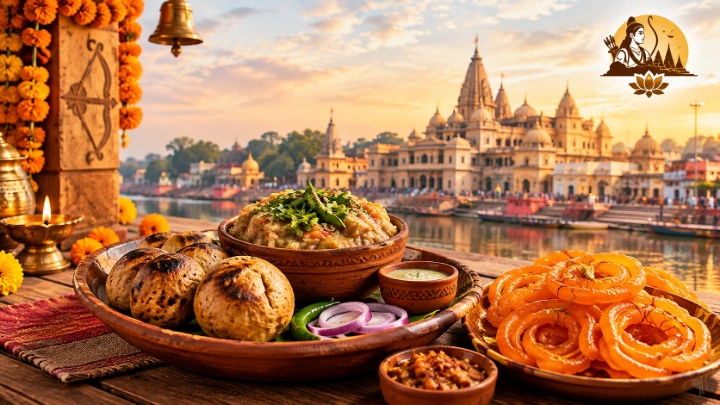
Ayodhya’s signature breakfast pairs crispy, spiced urad dal-stuffed kachoris with a tangy, slow-cooked aloo-tamatar curry and spiral-shaped, piping-hot jalebis soaked in saffron-scented sugar syrup.
I stopped at a humble, no-frills stall tucked just before the ascent to Hanumangarhi. The halwai was pulling golden, puffed kachoris directly from bubbling ghee. He crushed two hot kachoris lightly with his thumb, placed them into an earthen bowl, and ladled a steaming, soupy potato curry over them. There was no onion or garlic in sight, yet the depth of flavor—driven by crushed coriander seeds, asafoetida (hing), black peppercorns, and fresh ginger—was electrifying.
Right beside the savory station, another artisan swirled fermented batter into thin spirals straight into the hot ghee, tossing the crisp fritters into translucent sugar syrup. Alternating between a scorching, spicy mouthful of aloo-kachori and a bite of crunchy, juicy jalebi is a rite of passage here. It sets a bar so high that everyday city breakfasts pale in comparison.
What is Ayodhya's famous Peda, and where can you find the authentic version?
Ayodhya’s legendary Peda is a dense, deeply caramelized fudge made by slow-roasting milk mawa (khoya) until it turns mahogany brown, hand-pressed and infused with crushed green cardamom.
If you ask five locals where to find the best peda, all five will point you toward the buzzing shops flanking the steep stairs of Hanumangarhi Temple. Unlike the pale, milky pedas found in regular sweet shops across northern India, the pedas here undergo hours of painstaking caramelization on low charcoal heat.
I bought a quarter-kilo warm from the wooden tray. The texture is slightly coarse on the tongue, yielding to a buttery, nutty chew that carries notes of toasted milk solids, brown butter, and sweet cardamom warmth. It is rich without feeling cloying, and it retains its freshness for days, which explains why nearly every traveler carries boxes of these pedas back home as sacred prasad.
How does Ayodhya’s Chaat and Matar Chaat differ from other street foods?
Ayodhya’s chaat relies on whole white peas (safed matar) slow-simmered in copper cauldrons with roasted cumin and dry mango powder (amchur), garnished simply with green chilies, julienned ginger, and lemon juice.
By late afternoon, the culinary tempo shifts toward the bustling Chowk and the bazaars near Tedhi Bazar. Instead of drowning ingredients in heavy commercial sauces, street vendors here celebrate raw, balanced tartness.
I stood watching a chaat-wallah ladle warm, tender white peas onto a flat griddle, mashing them gently with a flat brass spatula before plating them into a leaf bowl. He spooned a tart tamarind-amchur broth over the top, sprinkled homemade roasted spice mix (bhuna jeera), and finished with a squeeze of fresh local lemon. The absence of overpowering sweet toppings allows the natural, earthy nuttiness of the legumes to shine through, accompanied by an addictive, throat-warming spice kick.
What makes Makhan Malai and Rabri-Kulfi a must-try dessert experience?
Makhan Malai is an ethereal, cloud-like winter milk foam infused with saffron and dew, while year-round hand-churned Rabri-Kulfi offers a dense, creamy refuge against warm afternoons.
If you visit during the cooler autumn and winter months, street carts early in the morning display massive terracotta platters filled with Makhan Malai (known locally also as Nimish). It looks like a whipped mountain of gold. Prepared by churning boiled milk that has been exposed to the overnight open-air dew, the resulting foam is lifted delicately and dusted with saffron, pistachios, and silver leaf (varq). Eating it feels like sweet flavored air evaporating on your tongue before you even have a chance to chew.
During warmer days, shift your sights to earthen matkas packed with ice and rock salt, housing traditional stick kulfi topped with a generous dollop of thick, layered lacchedar rabri.
Where can you experience a traditional Satvik Thali in Ayodhya?
You can experience an authentic Satvik Thali at traditional temple ashram bhojanalayas, community trusts, and historic dhabas near Nayaghat and the Ram Path.
Stepping inside an ashram dining hall at midday offers a refreshing contrast to street-side snacking. The food is prepared with austere cleanliness and immense reverence. Served on stainless steel plates or stitched leaf platters, a typical meal includes steaming grain-separated basmati rice, thin phulkas brushed with ghee, yellow arhar dal tempered with cumin and hing, a dry seasonal vegetable (often spiced pumpkin or raw banana), fresh mint-coriander chutney, and a bowl of sweet-sour raita. The restraint in oil and heavy cream brings forward the clean, natural sweetness of garden vegetables, leaving you energized rather than sluggish.
Which authentic foods and sweets of Ayodhya should you prioritize?
Travelers should prioritize breakfast kachori-jalebi, afternoon ashram thalis, evening street chaat, and temple pedas across key culinary hubs.
| Delicacy / Dish | Primary Category | Signature Food Hub | Flavor Profile | Typical Price Range (INR) |
| Kachori Sabzi & Jalebi | Breakfast / Snack | Hanumangarhi Marg, Nayaghat | Savory, peppery, sweet, crispy | ₹30 – ₹60 per plate |
| Ayodhya Khoya Peda | Traditional Sweet | Hanumangarhi Staircase Shops | Rich, caramelized, nutty, cardamom-heavy | ₹400 – ₹550 per kg |
| Safed Matar Chaat | Street Food | Chowk Bazaar & Tedhi Bazar | Tangy, spicy, warm, earthy | ₹25 – ₹40 per dona |
| Makhan Malai (Seasonal) | Traditional Dessert | Chowk & Temple corridors (Mornings) | Airy, melt-in-mouth, saffron-rich | ₹30 – ₹50 per cup |
| Lacchedar Rabri-Kulfi | Cold Dessert | Ram ki Paidi, Naya Ghat | Creamy, dense, floral, cooling | ₹40 – ₹70 per plate |
| Satvik Ashram Thali | Complete Meal | Local Math Bhojanalayas, Ram Path | Wholesome, mild, balanced, soulful | ₹80 – ₹150 per thali |
Frequently Asked Questions About Authentic Food of Ayodhya
Is all food in Ayodhya strictly vegetarian?
Yes, local food served within the sacred city limits and temple perimeters is strictly 100% vegetarian, with most heritage eateries adhering to satvik preparations without onion or garlic.
What is the single most famous food to buy as prasad in Ayodhya?
The deeply browned, caramelized Khoya Peda and Besan ke Laddoo bought from the century-old sweet makers outside Hanumangarhi are the most iconic offerings to carry home.
What is the typical daily budget required for eating in Ayodhya?
A traveler can easily enjoy three hearty, traditional meals alongside morning sweets and evening street chaat for approximately ₹300 to ₹500 per person per day.
Is street food in Ayodhya safe and hygienic for travelers?
Yes, provided you choose high-turnover stalls where kachoris, jalebis, and chaats are prepared fresh in plain sight, and drink packaged or RO-purified water.
How does the culinary soul of Ayodhya leave a lasting impression?
Ayodhya’s culinary landscape endures because it prioritizes heartfelt hospitality, time-tested recipes, and purity over modern commercial shortcuts.
As the sun sets over the Sarayu river and the evening breeze sweeps through the temple courtyards, the lingering taste of warm cardamom peda and the spicy memory of morning kachoris remain vivid. Exploring the food here is not just a food tour; it is an intimate glimpse into the timeless rhythm of a spiritual city that still knows how to nourish the soul.