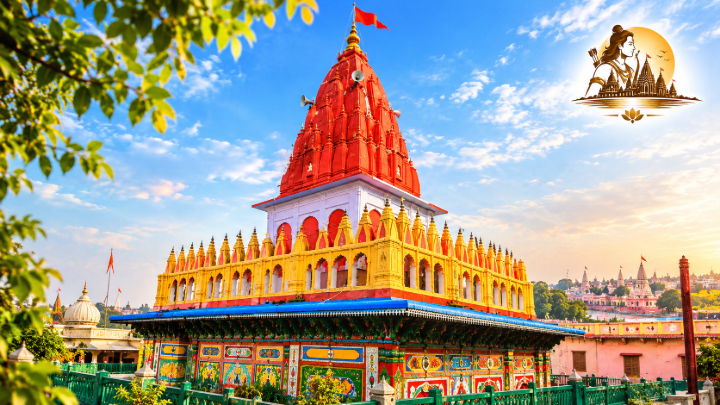
If you are planning a spiritual journey to the holy city of Lord Rama, your pilgrimage is incomplete without first seeking the blessings of his greatest devotee, Lord Hanuman. According to ancient tradition, visitors must pay their respects at Hanuman Garhi before heading to the Ram Janmabhoomi.
At AyodhyaNagari.in, we have compiled the ultimate, up-to-date guide on Hanuman Garhi—covering everything from darshan timings and temple history to the ideal dress code—to ensure your visit is seamless and spiritually fulfilling.
📌 Hanuman Garhi at a Glance (Quick Facts for Travelers)
Location: Sai Nagar Area, Ayodhya, Uttar Pradesh
Distance from Station: 1.5 km from Ayodhya Junction
Primary Deity: Lord Hanuman (Bal Swaroop / Child Form)
Temple Era: 10th Century
Physical Effort: 76 steps to climb
Entry Fee: Completely Free
Estimated Time Needed: 30 to 45 minutes
The Rich History: Battles, Nawabs, and Devotion
The story of Hanuman Garhi is a fascinating blend of faith and historical resilience. While the original structure is believed to have been built in the 10th century by King Jagat Singh (brother of King Vikramaditya), the site has seen numerous transformations.
Historical records indicate that the Bairagi Akhara reclaimed the temple grounds after defeating Awadh’s ruler, Nawab Shuja-ud-Daula, replacing a mosque that had been built during the Mughal era under Aurangzeb. In a remarkable turn of events, a subsequent Nawab of Awadh, Safdar Jung, became a major benefactor of the temple. After temple ash miraculously cured his son's severe illness, the Nawab funded the construction of the formidable, fort-like walls that surround the shrine today.
Mythology: Why is Hanuman Garhi So Important?
In Hindu mythology, Hanuman Garhi is the exact location where Lord Hanuman lived in a cave to guard Ramkot (the birthplace of Lord Rama).
Another powerful legend involves the revered poet-saint Tulsidas. When he was barred from entering Ayodhya, he prayed intensely to Lord Hanuman at this very spot. Touched by his devotion, Hanuman granted Tulsidas the blessing to establish a sacred shrine here.
Architecture: What to Expect Inside the Fort-Temple
Approaching Hanuman Garhi, you are met with a massive four-sided structure that looks more like a citadel than a traditional temple, complete with circular bastions at each corner.
The 76 Steps: Devotees must climb a flight of 76 steps to reach the main courtyard.
The Sanctum Sanctorum: Inside the inner cave, you will find a unique 6-inch idol of Lord Hanuman in his Bal (youthful) form, sitting peacefully on the lap of his mother, Maa Anjani.
Sacred Details: The deity wears a beautiful silver Tulsi garland inscribed with "Rama." The inner walls are intricately carved with verses from the Hanuman Chalisa, and the complex features a towering Vijay Stambh (Victory Pillar).
Hanuman Garhi Timings & Pooja Schedule
To accommodate thousands of daily pilgrims, the temple administration (Nirvani Ani Akhara) maintains a consistent schedule throughout the week.
Morning Darshan: 5:00 AM – 11:00 AM
Evening Darshan: 4:00 PM – 10:00 PM
Peak Days: Tuesdays and Saturdays draw massive crowds, as these days are highly auspicious for Hanuman devotees.
Dress Code and Temple Guidelines
To maintain the spiritual sanctity of the premises, the temple strictly enforces a traditional dress code:
For Men: Kurtas, pajamas, or full-length trousers with shirts.
For Women: Sarees, salwar kameez, or traditional wear that fully covers the knees and shoulders.
Strictly Prohibited: Shorts, skirts, sleeveless tops, and other Western casual wear.
Note: Visitors of all faiths are welcome to experience the temple's peaceful aura, provided they respect the Hindu customs and traditions observed on the premises.
Best Time to Visit
The most comfortable window to explore Ayodhya is the winter season, from October to March. The pleasant weather allows you to easily climb the temple steps and explore the surrounding Sai Nagar area.
If you want to witness Hanuman Garhi at its absolute peak of spiritual energy, plan your trip around Ram Navami, Hanuman Jayanti, or Diwali. During these festivals, the temple is adorned with spectacular lights and echoes with continuous devotional chanting.
How to Reach Hanuman Garhi, Ayodhya
Navigating to the temple is straightforward, no matter your mode of transport:
By Air: The Maharishi Valmiki International Airport in Ayodhya provides direct flights. Alternatively, the Chaudhary Charan Singh Airport in Lucknow (151 km away) connects to all major Indian hubs.
By Train: The Ayodhya Junction is highly accessible and connects directly to Delhi, Varanasi, Mumbai, Kolkata, and Bangalore. The temple is merely a 1.5 km auto-rickshaw ride from the station.
By Road: Uttar Pradesh state buses and private taxis seamlessly connect Ayodhya to neighboring cities like Lucknow, Kanpur, and Gorakhpur.
Frequently Asked Questions (FAQ) for Ayodhya Travelers
Why do we visit Hanuman Garhi before Ram Mandir? According to local tradition and mythological lore, Lord Rama granted Hanuman the right to bless devotees first. Seeking permission and blessings at Hanuman Garhi is considered mandatory before entering the Ram Janmabhoomi.
How many steps are there in Hanuman Garhi? Visitors need to climb 76 steps to reach the main shrine of Hanuman Garhi.
Is there an entry fee for Hanuman Garhi? No, entry for darshan is completely free for all devotees.
For more exclusive insights, local itineraries, and historical deep-dives into the sacred city of Lord Rama, stay connected with AyodhyaNagari.in!