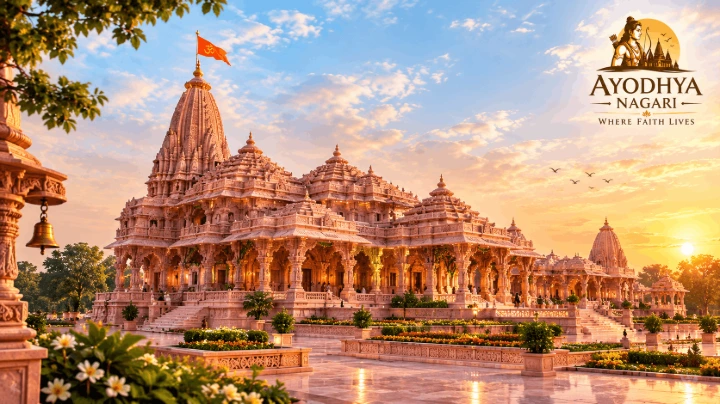
Ram Mandir Ayodhya: Complete Visitor Guide
A visit to the newly consecrated Shri Ram Janmabhoomi Mandir requires straightforward preparation. Entry protocols are strict, queue management changes during peak festivals, and navigating the surrounding sacred landmarks takes thoughtful coordination. This guide details verified darshan timings, online pass procedures, security dos and don'ts, and an organized 2-day itinerary to help you experience Ayodhya Dham smoothly.
What Are the Ram Janmabhoomi Darshan Timings?
General darshan at Ram Mandir is open daily from 6:30 AM to 12:00 PM in the morning session, and from 2:00 PM to 10:00 PM in the evening session. Gates close temporarily between 12:00 PM and 2:00 PM for the deity's afternoon rest (Bhog and Vishram).
The temple trust organizes darshan through regular walking queues and designated aarti passes. During major festivals such as Ram Navami, Diwali, and monthly Ekadashi, the trust often extends daily viewing hours until 11:00 PM to accommodate high pilgrim volumes.
| Aarti Name | Timing | Pass Requirement |
| Mangala Aarti | 4:30 AM | Advance Pass Mandatory |
| Shringar Aarti | 6:30 AM | Advance Pass Mandatory |
| Bhog Aarti | 12:00 PM | Entry Closes / Pass for attendees |
| Sandhya Aarti | 7:30 PM | Advance Pass Mandatory |
| Shayan Aarti | 10:00 PM | Advance Pass Mandatory |
Regular darshan does not require a fee or a pre-booked pass. Pilgrims enter through the general queue lines along the Janmabhoomi Path.
How to Book Ram Mandir Darshan and Aarti Passes Online
You can book official Aarti passes free of charge through the official portal of the Shri Ram Janmabhoomi Teerth Kshetra Trust (srjbtkshetra.org).
Passes are released on a rolling basis, typically 15 to 30 days in advance. Follow these operational steps to secure one:
Visit the official portal:
Go to the official trust website and navigate to the Aarti/Darshan booking section.
Log in with your mobile number:
Enter your active Indian mobile number to generate and submit an OTP.
Select slot and service:
Choose between Mangala, Shringar, or Sandhya Aarti, then pick an open date.
Enter devotee details:
Input full legal names, ages, and government ID details (Aadhaar Card, Passport, or Voter ID) for each attendee. Up to four family members can be booked on a single mobile number.
Download the pass:
Save the confirmation PDF to your phone. You will need to present this along with physical original IDs at the Pilgrim Facility Centre (PFC) near the temple entrance for verification.
Same-day offline tokens are also issued at the trust counter on a first-come, first-served basis, but slots run out within minutes of counter opening at 5:00 AM.
Temple Rules, Dress Code, and Security Protocols
Mobile phones, cameras, smartwatches, earphones, leather belts, and large bags are strictly banned beyond the main security perimeter of the Ram Janmabhoomi complex.
The temple administration operates a massive, automated Pilgrim Facility Centre equipped with thousands of secure lockers. While locker storage is free, queuing for locker drop-off and pickup can add 30 to 45 minutes to your total visit during peak hours. If possible, leave all electronics, metal accessories, and prohibited items in your hotel room.
Dress Code Recommendations
There is no rigid uniform mandated by the trust, but traditional, modest attire is standard.
Men: Dhoti-kurta or regular trousers with a shirt/kurta. Sleeveless tops and short trousers are discouraged and may be turned away at security.
Women: Sarees, salwar suits, or clothing covering shoulders and knees.
Footwear: Footwear stands are located near the entry gate. Keep your token safely with you.
Essential Temples to Visit Alongside Ram Mandir
According to local tradition, an Ayodhya pilgrimage is considered incomplete without visiting the protective shrine of Lord Hanuman and the historical riverfront temples.
Hanuman Garhi
Hanuman Garhi stands in the center of the city on an elevated mound. According to regional belief, Lord Hanuman guarded the city from this vantage point, which is why pilgrims traditionally pay respects here before entering Ram Mandir.
Reaching the inner sanctum requires climbing 76 steep stone steps. The temple gates open early at 5:00 AM and close around 10:00 PM, with a brief afternoon break. The queue along the staircase can be compact and energetic; morning visits between 6:00 AM and 7:30 AM offer the calmest access.
Kanak Bhawan
Located northeast of the Janmabhoomi compound in the Ramkot area, Kanak Bhawan ("Golden Palace") is dedicated to Lord Rama and Devi Sita. Legend holds that this palace was presented to Sita by Queen Kaikeyi upon her arrival in Ayodhya.
The temple exhibits Bundela-style architectural arches and intricate central courtyards. Kanak Bhawan timings are split into two shifts: 8:00 AM to 11:30 AM and 4:30 PM to 9:30 PM. The evening bhajan sessions inside the inner hall draw large gatherings.
Nageshwarnath Temple
Situated near Ram Ki Paidi at Naya Ghat, Nageshwarnath Temple is dedicated to Lord Shiva. Local historical records attribute its original foundation to Prince Kush, son of Lord Rama. The temple serves as the central hub of Ayodhya's Shivaratri celebrations and represents the primary Shaivite presence in the city. It remains open from 5:00 AM to 12:00 PM and 4:00 PM to 9:00 PM.
Saryu Ghat and Evening Aarti
The sacred Saryu River borders the northern edge of the historic city. The daily Saryu Ghat aarti starts around 6:00 PM in winter and 6:30 PM to 7:00 PM in summer at the main Naya Ghat (Ram Ki Paidi). The ritual involves coordinated brass lamps, Vedic chanting, and lit earthen diyas set afloat on the water. Arrive at least 30 minutes before sunset to secure seating along the concrete steps.
2-Day Ayodhya Itinerary: A Balanced Plan
This structured plan optimizes travel times, avoids mid-day heat, and matches temple opening windows.
Day 1: The Core Pilgrimage Path
06:00 AM – 07:30 AM: Start at Hanuman Garhi. Early arrival minimizes waiting on the 76 steps.
08:00 AM – 11:00 AM: Walk to the Ram Janmabhoomi complex. Clear security checks and proceed along the covered corridors to the sanctum sanctorum for darshan of Ram Lalla.
11:30 AM – 01:00 PM: Walk down to Kanak Bhawan before it closes for afternoon bhog at 11:30 AM, or explore the nearby Dashrath Mahal courtyard.
01:00 PM – 03:30 PM: Lunch break and rest at your accommodation during the citywide afternoon temple shutdown.
04:30 PM – 06:00 PM: Visit Nageshwarnath Temple and walk along the Ram Ki Paidi boardwalks.
06:00 PM – 07:30 PM: Attend the grand Saryu Ghat Aarti at sunset.
Day 2: Heritage Sites & Local Culture
06:30 AM – 08:00 AM: Take an early morning wooden boat ride on the Saryu River from Guptar Ghat, where Lord Rama took Jal Samadhi according to the Ramayana tradition.
08:30 AM – 10:30 AM: Visit Treta Ke Thakur temple, traditionally marked as the grounds of the ancient Ashvamedha Yagya, and the surrounding Surya Kund.
11:00 AM – 01:00 PM: Tour Tulsi Smarak Bhawan, a cultural research institution hosting Ramayana art displays, manuscripts, and continuous Ramcharitmanas recitations.
02:00 PM – 04:00 PM: Explore the handicraft stalls along Ram Path for carved wooden artifacts, devotional literature, and Ayodhya peda sweets.
04:30 PM onwards: Return to the Ram Janmabhoomi perimeter to view the temple exterior illuminated under evening floodlights.
How to Reach Ayodhya and Local Transport
Ayodhya is well connected across all major national transport networks.
By Air: Maharishi Valmiki International Airport (AYJ) sits approximately 10 km from the city center, offering scheduled direct flights to Delhi, Mumbai, Ahmedabad, and other major metros. Taxis and prepaid autos wait right outside the arrival terminal.
By Train: Ayodhya Dham Junction (station code: AY) and Ayodhya Cantt Junction (AYC) connect directly to New Delhi, Lucknow, Varanasi, Gorakhpur, and Kolkata. Vande Bharat Express and Amrit Bharat services run daily along these lines.
By Road: National Highway 27 runs directly through the district. Ayodhya is roughly 135 km from Lucknow (a 2.5-hour drive) and 200 km from Varanasi (a 4-hour drive).
Local Commute: E-Rickshaws
The central zone of the historic city—including Ram Path, Bhakti Path, and Dharma Path—frequently restricts heavy automotive traffic. The primary mode of internal transport is battery-operated e-rickshaws. Fares generally range between ₹10 to ₹30 per passenger for shared hops between major junctions, or ₹100 to ₹150 for private hires across town.
Frequently Asked Questions
What are the main darshan timings for Ram Mandir Ayodhya?
General darshan is open from 6:30 AM to 12:00 PM, and resumes from 2:00 PM to 10:00 PM daily. The temple doors close between 12:00 PM and 2:00 PM for deity bhog and rest.
How many steps are there at Hanuman Garhi Ayodhya?
Visitors must climb exactly 76 stone steps to reach the main sanctum of Hanuman Garhi. The climb is manageable for most, but handrails are installed along the sides to assist seniors.
Is an online pass mandatory for Ram Mandir darshan?
No, an online pass is not mandatory for regular darshan. You can walk into the general queue via the Janmabhoomi Path without any booking. Passes are only required for attending specific morning and evening aartis.
What is the exact time for the Saryu Ghat evening aarti?
The Saryu Aarti at Naya Ghat begins around 6:00 PM in the winter and shifts to between 6:30 PM and 7:00 PM during summer months, directly aligning with sunset.
How much time does it take to complete Ram Mandir darshan?
On average weekdays, completing the security checks, walking the corridors, and finishing darshan takes 1.5 to 2.5 hours. During weekends, festivals, and auspicious tithis, queues can extend the wait to 3 to 4 hours.
About the Author
Raj Maurya is the founder and writer behind Ayodhya Nagari, a dedicated resource documenting the culture, heritage, and practical visitor logistics of Ayodhya Dham. Drawing on local tracking of civic changes, transit rules, and trust updates, he creates straightforward guides to help pilgrims travel with clarity.