Best-known attractions
Shri Ram Janmabhoomi Mandir, Hanuman Garhi and Kanak Bhawan form a useful starting point for a first visit.
Explore the major sites →Planning a visit to Ayodhya, Uttar Pradesh? Explore its best-known temples, sacred riverfronts, historical monuments and cultural sites with a practical guide to what each place offers and how to organise your sightseeing.
Begin with the major pilgrimage landmarks, then leave room for Kanak Bhawan, the Sarayu riverfront and Ayodhya's wider historical heritage. Current access, opening arrangements and security instructions can change, so confirm them before setting out.

Start with Shri Ram Janmabhoomi Mandir, Hanuman Garhi and Kanak Bhawan. Add Ram Ki Paidi and the Sarayu riverfront for a riverside experience, and consider Nageshwarnath Temple, Guptar Ghat and Treta Ke Thakur if access and time permit. Visitors interested in wider regional history can explore Gulab Bari in the historic Faizabad area.
Use this overview to choose a route around your interests, available time and current visitor arrangements. These are planning categories, not guarantees of opening hours or access.
Shri Ram Janmabhoomi Mandir, Hanuman Garhi and Kanak Bhawan form a useful starting point for a first visit.
Explore the major sites →Nageshwarnath Temple, Dashrath Mahal, Treta Ke Thakur and Jain heritage sites add different devotional traditions.
Explore religious sites →Ram Ki Paidi and the wider Sarayu riverfront offer a different experience from temple courtyards.
Explore riverside places →Gulab Bari and Bahu Begum's Maqbara introduce visitors to the Nawabi-era heritage of the wider Ayodhya–Faizabad region.
Explore heritage places →Consider Guptar Ghat, Deokaali and other officially listed sites if your schedule allows and access is confirmed.
Explore more places →Concentrate on a few central landmarks and one riverfront visit rather than trying to cover every site.
Choose an itinerary →These major landmarks are a practical starting point for Ayodhya sightseeing. Religious traditions are described as traditions; present-day visitor arrangements should be checked with the relevant authorities.
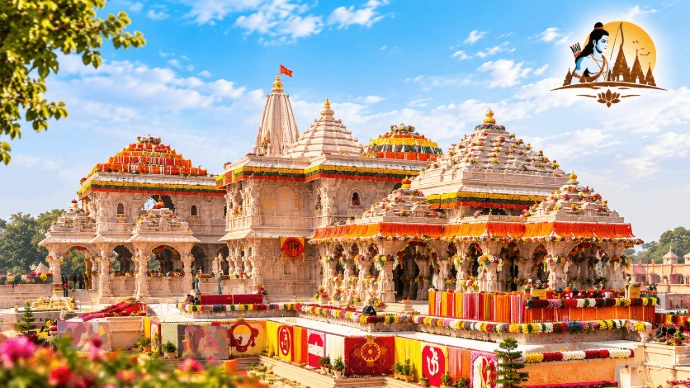
Shri Ram Janmabhoomi Mandir is the principal destination for many pilgrims visiting Ayodhya because of its association with the birthplace of Lord Rama in Hindu religious tradition.
The temple complex is known for its carved stone architecture and central place in contemporary Hindu pilgrimage. For many visitors, darshan is the anchor of the trip rather than one stop in a general sightseeing tour.
Visitor preparation: Check the current official entry process, security instructions, prohibited-item rules, cloakroom arrangements and any pass requirements before leaving your accommodation. Do not assume that phones, bags, food, footwear or photography are permitted in every area.
Hanuman Garhi is a prominent temple dedicated to Lord Hanuman and one of Ayodhya's most recognisable religious landmarks.
The District Ayodhya tourism page describes the shrine's traditional association with Hanuman as the guardian of Ayodhya and identifies the image of young Hanuman seated on the lap of Maa Anjani in the main temple.
Visitor tips: The approach includes steps. Allow for this when travelling with older adults, young children or anyone who may find stairways difficult. Check current queue arrangements and avoid rushing on crowded steps. Do not assume a step-free route is available.
Kanak Bhawan is a temple associated with Lord Rama and Goddess Sita, noted for its courtyard, arched entrances and palace-like setting.
According to religious tradition, the building was gifted to Sita by Queen Kaikeyi after her marriage to Rama. The present site is associated with later renovation and rebuilding; the traditional story should not be confused with a verified construction date for the current structure.
What to notice: The courtyard layout, architectural details and the central shrine. Keep voices low, follow worshippers' lead and observe any photography restrictions posted at the site.
Nageshwarnath Temple is a Shaivite shrine located in the Ram Ki Paidi area, making it a useful addition to a visit focused on the riverfront and nearby temples.
Local religious tradition links the temple's establishment with Kush, a son of Lord Rama. This is a traditional account, not a claim that the present structure has been archaeologically dated to the epic period.
Visitor tips: Combine it with the nearby riverfront only after checking current access and temple arrangements. During worship, follow the site's instructions and avoid interrupting rituals.
Dashrath Mahal is a devotional site associated in Hindu tradition with King Dasharatha, the father of Lord Rama.
Visitors generally include it for its place in Ayodhya's sacred geography and devotional life rather than as a securely dated surviving royal palace from the epic period. The name and tradition should not be taken as archaeological proof that the present building is the original residence described in scripture.
Visitor tips: Treat the complex as an active religious site. Confirm access, worship schedules and any restrictions locally before planning around it.
Shri Lakshman Qila is a religious site associated with Lakshmana in Ayodhya's devotional landscape and may interest visitors exploring beyond the best-known temples.
Treat the site's religious associations as part of living tradition unless a specific historical claim is supported by a reliable dated source. Do not assume that its name establishes the date or original function of the present buildings.
Visitor tips: Verify the exact entrance, current access and whether visitors are welcome at the time of your trip. Respect residential, monastic and worship areas.
The Sarayu riverfront offers a different perspective on Ayodhya: bathing ghats, devotional activity, open river views and places for quiet reflection. River conditions and local access can change, so follow on-site instructions.
Ram Ki Paidi is a series of ghats beside the Sarayu River, known for its broad stepped riverfront and illuminated evening appearance.
The District Ayodhya tourism portal describes the ghats as a place used by devotees for ritual bathing. The area is also associated with major public celebrations. Its contemporary appearance should be understood as a developed riverfront, not assumed to be unchanged from antiquity.
Visitor tips: Watch your footing near water, supervise children closely, and obey barriers or restrictions. Evening lighting can make the riverfront visually striking, but event schedules and access may vary.
The Sarayu riverfront is important to Ayodhya's religious life and offers visitors a chance to observe riverside rituals and the city's relationship with the river.
“Saryu Ghat” is sometimes used broadly for riverside areas rather than one uniquely defined landing. Check the exact ghat or meeting point before travelling, particularly if you have arranged transport or plan to meet a group.
Visitor tips: Use designated access points, avoid entering the water where restricted, and do not assume boating or aarti is available at a particular time without current confirmation.
Guptar Ghat is a Sarayu-side religious destination traditionally associated with the belief that Lord Rama departed from the earthly world here.
The ghat offers a different setting from the central riverfront and can be considered by visitors who have time to explore a wider area of Ayodhya. The association with Rama's departure belongs to religious tradition and should be presented as such.
Visitor tips: Confirm local access and transport before departure. Do not assume boat services, aarti schedules or river conditions; follow safety directions and avoid unsafe river edges.
These sites broaden a visit beyond the main pilgrimage route. Their traditional associations are important to devotees, but should not be confused with independently established archaeological dates.
Treta Ke Thakur is a temple associated in Hindu tradition with Lord Rama and the Ashvamedha Yajna narrative.
The site is included among Ayodhya attractions in Incredible India's destination listings. Because access arrangements may be limited or changeable, visitors should confirm whether the temple is open to the public on their intended date.
Visitor tips: Do not plan the whole day's route around this stop until current opening and entry information is confirmed.
Deokaali is a religious site associated with stories from the Ramayana tradition and is listed among Ayodhya's attractions by the district administration.
The temple adds context for visitors interested in the city's network of local sacred places rather than only its largest complexes. The specific legends associated with the site should be attributed to tradition.
Visitor tips: Verify the exact location, current access and any local worship schedule before travelling.
Ayodhya is significant in Jain traditions, and the District Ayodhya tourism portal lists Jain religious sites among its attractions.
These places can broaden a visit to include the city's Jain religious heritage. The specific temple, associated Tirthankara, local tradition and access arrangements should be checked for the individual site rather than generalised across every Jain shrine in the city.
Visitor tips: Follow the temple's rules on footwear, photography, food, conduct and access to worship areas. Be especially respectful during active worship.
Shri Ram Janaki Birla Temple is a temple dedicated to Lord Rama and Goddess Sita, listed among the religious attractions of Ayodhya.
It provides an additional devotional stop for visitors who have more time after the principal temples. It should be treated as a distinct site rather than assumed to be part of the Ram Mandir complex.
Visitor tips: Confirm the exact location and current opening arrangements before travelling, particularly if you are coordinating several sites in one day.
Ayodhya's heritage includes more than religious architecture. The wider Ayodhya–Faizabad region also contains sites connected with Awadh's Nawabi history and India's diverse religious traditions.
Gulab Bari, meaning “Garden of Roses,” is the mausoleum of Nawab Shuja-ud-Daula in the historic Faizabad area of Ayodhya district.
The District Ayodhya administration describes a central tomb set within a charbagh garden with fountains and water channels. The site offers a useful contrast to Ayodhya's temple-centred pilgrimage circuit and introduces visitors to the region's Nawabi architectural history.
Visitor tips: Confirm current access, opening arrangements, any monument-specific restrictions and photography rules before going. Do not assume that a garden or heritage complex is open simply because it appears in a tourism listing.
Bahu Begum ka Maqbara is a monument associated with the Nawabi heritage of the Ayodhya–Faizabad region.
It is listed among the area's places of interest and can appeal to visitors interested in historic architecture beyond the principal pilgrimage sites. Keep the distinction clear between the modern district name, Ayodhya, and the older Faizabad urban context when describing the monument's location.
Visitor tips: Check whether the monument is open to visitors, whether access is managed, and whether photography is allowed before planning a visit.
Visitors interested in early history can explore the scholarly discussion of Ayodhya and Saketa in Buddhist literature and historical research, while recognising that a textual reference is not automatically a visitor attraction.
This topic is best approached through reliable academic studies and identified archaeological evidence. Avoid presenting a literary reference as proof that a specific surviving building dates to the period, or claiming that every Buddhist-associated site mentioned in a source is accessible to tourists today.
Visitor tips: Research the exact site and its current status before making a special trip. If no verifiable public attraction is identified, treat this as a history-reading topic rather than a sightseeing stop.
Ayodhya's long history is studied through different kinds of evidence, including texts, inscriptions, material remains and later historical records.
These evidence types answer different questions. Religious texts can explain traditions and sacred geography; inscriptions and securely dated material remains can help establish particular historical contexts. Neither should be used to claim more than the evidence supports.
Visitor tips: If archaeology is your main interest, consult specialist research and official heritage sources before choosing a site. Do not enter protected, restricted or excavated areas without permission.
If you have already planned the principal temple visit, use this shortlist to build a wider trip. These are verified named attractions in official tourism listings, not a claim that every location is hidden, quiet or open at all times.
| Place | Why consider it? | Best fit | Before you go |
|---|---|---|---|
| Guptar Ghat | Riverside setting and a distinct devotional tradition. | Travellers with time for a separate riverfront outing. | Confirm the route, access and current river conditions. |
| Gulab Bari | Nawabi-era mausoleum and charbagh garden. | History and architecture enthusiasts. | Check current access and monument rules. |
| Bahu Begum ka Maqbara | Historic architecture in the wider Faizabad heritage landscape. | Visitors with a broader regional history interest. | Verify public access and exact location. |
| Jain heritage sites | Religious traditions beyond the main Hindu pilgrimage circuit. | Visitors interested in Jain heritage and living religious practice. | Identify the particular temple and follow its rules. |
| Deokaali | A local temple listed in the district's tourism material. | Travellers with additional time for religious sites. | Confirm current access and map pin. |
| Treta Ke Thakur | A temple associated with Ramayana traditions. | Visitors researching Ayodhya's sacred geography. | Check whether it is open on your intended date. |
The District Ayodhya and Incredible India portals list many of these attractions. A listing confirms that a place is recognised as an attraction; it does not guarantee unrestricted entry, current opening hours or specific facilities.
These routes are flexible planning suggestions, not fixed schedules. Temple opening arrangements, security queues, local transport, weather and temporary restrictions may require a different order.
Best for: visitors on a short stopover who want to prioritise the main pilgrimage area.
Keep in mind: A single security queue or restricted entry window can affect the entire half-day plan. Do not promise yourself all three stops.
Best for: a first visit combining the main temple area with a riverside experience.
Keep in mind: This is a prioritised route, not a guarantee that all sites can be completed. Skip optional stops if queues or heat make the day too demanding.
Best for: visitors who want a more relaxed mix of temples, ghats and heritage.
Day 1 — Central pilgrimage area
Day 2 — Wider heritage
Keep in mind: Gulab Bari is in the wider historic Faizabad area; don't assume every stop is walkable from the central temples.
The right itinerary depends on your interests, mobility, available time and willingness to walk or stand in queues.
Prioritise Shri Ram Janmabhoomi Mandir, Hanuman Garhi and Kanak Bhawan, then add Ram Ki Paidi if your schedule allows. Keep the route simple.
Choose fewer stops, carry only permitted essentials, plan food and rest breaks, and keep children close around queues, steps and river edges.
Check stairs, walking distances, seating and vehicle access before choosing a site. Hanuman Garhi's approach includes steps; do not assume a step-free alternative.
Compare temple architecture and living religious traditions with documented regional heritage such as Gulab Bari. Use specialist sources for historical claims.
Leave room for worship and reflection rather than treating every temple as a quick photo stop. Follow each site's customs and instructions.
Photograph public spaces only where permitted. Do not assume photography is allowed inside temples, near security areas, during rituals or when people have not consented.
A little preparation helps make a pilgrimage or sightseeing day safer and less stressful. Current official instructions take priority over general travel advice.
Read the latest instructions for each major temple before departure. Prohibited items and storage arrangements can differ by site and may change. Do not assume a locker is available or that a particular item is allowed.
Choose comfortable, respectful clothing and follow posted rules. Remove footwear where required, keep voices low during worship and avoid blocking entrances or ritual areas.
Large religious events and public holidays can affect queues, traffic and access. Check official notices close to your travel date and keep the itinerary flexible.
Plan for drinking water, shade, meals and rest. Check seasonal weather forecasts. Carry only items allowed by the destinations you plan to enter.
Confirm the exact location of each destination, particularly for named ghats and heritage monuments. Road access and drop-off points may differ from what an old map or blog shows.
Follow posted photography restrictions. Avoid photographing security facilities or worshippers in ways that intrude on privacy. Ask permission before taking close-up photographs of people.
Stay within permitted areas, supervise children and respect barriers. Never assume that water is safe to enter or that a boat service is operating without confirmation.
Check steps, walking requirements, resting places and vehicle access in advance. Plan fewer stops if mobility, heat or long queues may make the day tiring.
Use official district and temple sources for time-sensitive information. Recheck access, entry instructions, public events and transport arrangements shortly before you travel.
Useful official starting points: District Ayodhya tourist places, Incredible India: Ayodhya and the Ayodhya Nagari travel guides.
Quick answers for planning a visit. Current access and opening arrangements should always be confirmed before travel.
Start with Shri Ram Janmabhoomi Mandir, Hanuman Garhi and Kanak Bhawan. Ram Ki Paidi and the Sarayu riverfront add a riverside experience. If you have more time, consider Nageshwarnath Temple, Guptar Ghat, Treta Ke Thakur or a verified heritage site such as Gulab Bari.
For a first visit, organise the day around your planned Shri Ram Janmabhoomi Mandir entry, then consider Hanuman Garhi and Kanak Bhawan. Add Ram Ki Paidi if time, access and local conditions allow. Check current temple instructions before finalising the order.
Yes, you can get an introduction to Ayodhya in one day by prioritising a few central landmarks and a riverfront visit. You may not be able to visit every temple or heritage site, especially if queues, security arrangements or travel conditions change.
One day can suit a focused first visit. Two days provide more flexibility for major temples, the Sarayu riverfront and selected historical or cultural sites. The ideal length depends on your pace, interests and the current visitor arrangements.
Hanuman Garhi, Kanak Bhawan and other central religious sites are commonly combined with a Ram Mandir visit. Confirm exact routes and current access using a live map; do not assume every attraction is within easy walking distance or that pedestrian routes are unchanged.
Well-known religious sites include Shri Ram Janmabhoomi Mandir, Hanuman Garhi, Kanak Bhawan, Nageshwarnath Temple, Dashrath Mahal, Treta Ke Thakur, Deokaali and Jain temples. Verify current opening and access information for each individual site.
Ram Ki Paidi is a prominent series of ghats along the Sarayu. The wider Sarayu riverfront and Guptar Ghat offer different settings and religious associations. Check the exact ghat location, river conditions and current access before travelling.
Gulab Bari and Bahu Begum ka Maqbara are associated with the Nawabi heritage of the wider Ayodhya–Faizabad region. Temple sites also have important religious and cultural histories, but traditional accounts should be distinguished from independently documented dates and archaeological evidence.
Yes. Options include Hanuman Garhi, Kanak Bhawan, Ram Ki Paidi, Nageshwarnath Temple, Guptar Ghat, Jain heritage sites and selected historical monuments. Choose according to your interests, available time and confirmed public access.
Check each temple's current opening and entry instructions, security rules, prohibited items, footwear arrangements and photography policy. Dress respectfully, plan for queues and walking, keep children close and follow instructions from temple staff and local authorities.
Continue with related guides for route planning, local food, temple-specific visitor information and the wider story of Ayodhya.
Build a realistic route around the main temples, a rest break and the riverfront.
Read the one-day guide →Explore trip-planning information, travel options and useful preparation tips.
Read the travel guide →Discover local delicacies and food ideas to consider during your visit.
Explore the food guide →Read a dedicated guide before checking current official visitor instructions.
Read the Ram Mandir guide →Explore the historical context of Ayodhya's sacred geography and regional heritage.
Start with the district heritage source →Browse the published Ayodhya Nagari articles for more trip-planning information.
Explore all guides →Information note: This guide is for trip planning and general information. Temple access, opening arrangements, security rules, event schedules, transport and river conditions may change. Check the relevant official or local source before travelling. Religious traditions are identified as traditions and should not be read as archaeological dating claims.
Planning a visit to Ayodhya, Uttar Pradesh? Explore its best-known temples, sacred riverfronts, historical monuments and cultural sites with a practical guide to what each place offers and how to organise your sightseeing.
Begin with the major pilgrimage landmarks, then leave room for Kanak Bhawan, the Sarayu riverfront and Ayodhya's wider historical heritage. Current access, opening arrangements and security instructions can change, so confirm them before setting out.
Start with Shri Ram Janmabhoomi Mandir, Hanuman Garhi and Kanak Bhawan. Add Ram Ki Paidi and the Sarayu riverfront for a riverside experience, and consider Nageshwarnath Temple, Guptar Ghat and Treta Ke Thakur if access and time permit. Visitors interested in wider regional history can explore Gulab Bari in the historic Faizabad area.
Use this overview to choose a route around your interests, available time and current visitor arrangements. These are planning categories, not guarantees of opening hours or access.
Shri Ram Janmabhoomi Mandir, Hanuman Garhi and Kanak Bhawan form a useful starting point for a first visit.
Explore the major sites →Nageshwarnath Temple, Dashrath Mahal, Treta Ke Thakur and Jain heritage sites add different devotional traditions.
Explore religious sites →Ram Ki Paidi and the wider Sarayu riverfront offer a different experience from temple courtyards.
Explore riverside places →Gulab Bari and Bahu Begum's Maqbara introduce visitors to the Nawabi-era heritage of the wider Ayodhya–Faizabad region.
Explore heritage places →Consider Guptar Ghat, Deokaali and other officially listed sites if your schedule allows and access is confirmed.
Explore more places →Concentrate on a few central landmarks and one riverfront visit rather than trying to cover every site.
Choose an itinerary →These major landmarks are a practical starting point for Ayodhya sightseeing. Religious traditions are described as traditions; present-day visitor arrangements should be checked with the relevant authorities.
Shri Ram Janmabhoomi Mandir is the principal destination for many pilgrims visiting Ayodhya because of its association with the birthplace of Lord Rama in Hindu religious tradition.
The temple complex is known for its carved stone architecture and central place in contemporary Hindu pilgrimage. For many visitors, darshan is the anchor of the trip rather than one stop in a general sightseeing tour.
Visitor preparation: Check the current official entry process, security instructions, prohibited-item rules, cloakroom arrangements and any pass requirements before leaving your accommodation. Do not assume that phones, bags, food, footwear or photography are permitted in every area.
Hanuman Garhi is a prominent temple dedicated to Lord Hanuman and one of Ayodhya's most recognisable religious landmarks.
The District Ayodhya tourism page describes the shrine's traditional association with Hanuman as the guardian of Ayodhya and identifies the image of young Hanuman seated on the lap of Maa Anjani in the main temple.
Visitor tips: The approach includes steps. Allow for this when travelling with older adults, young children or anyone who may find stairways difficult. Check current queue arrangements and avoid rushing on crowded steps. Do not assume a step-free route is available.
Kanak Bhawan is a temple associated with Lord Rama and Goddess Sita, noted for its courtyard, arched entrances and palace-like setting.
According to religious tradition, the building was gifted to Sita by Queen Kaikeyi after her marriage to Rama. The present site is associated with later renovation and rebuilding; the traditional story should not be confused with a verified construction date for the current structure.
What to notice: The courtyard layout, architectural details and the central shrine. Keep voices low, follow worshippers' lead and observe any photography restrictions posted at the site.
Nageshwarnath Temple is a Shaivite shrine located in the Ram Ki Paidi area, making it a useful addition to a visit focused on the riverfront and nearby temples.
Local religious tradition links the temple's establishment with Kush, a son of Lord Rama. This is a traditional account, not a claim that the present structure has been archaeologically dated to the epic period.
Visitor tips: Combine it with the nearby riverfront only after checking current access and temple arrangements. During worship, follow the site's instructions and avoid interrupting rituals.
Dashrath Mahal is a devotional site associated in Hindu tradition with King Dasharatha, the father of Lord Rama.
Visitors generally include it for its place in Ayodhya's sacred geography and devotional life rather than as a securely dated surviving royal palace from the epic period. The name and tradition should not be taken as archaeological proof that the present building is the original residence described in scripture.
Visitor tips: Treat the complex as an active religious site. Confirm access, worship schedules and any restrictions locally before planning around it.
Shri Lakshman Qila is a religious site associated with Lakshmana in Ayodhya's devotional landscape and may interest visitors exploring beyond the best-known temples.
Treat the site's religious associations as part of living tradition unless a specific historical claim is supported by a reliable dated source. Do not assume that its name establishes the date or original function of the present buildings.
Visitor tips: Verify the exact entrance, current access and whether visitors are welcome at the time of your trip. Respect residential, monastic and worship areas.
The Sarayu riverfront offers a different perspective on Ayodhya: bathing ghats, devotional activity, open river views and places for quiet reflection. River conditions and local access can change, so follow on-site instructions.
Ram Ki Paidi is a series of ghats beside the Sarayu River, known for its broad stepped riverfront and illuminated evening appearance.
The District Ayodhya tourism portal describes the ghats as a place used by devotees for ritual bathing. The area is also associated with major public celebrations. Its contemporary appearance should be understood as a developed riverfront, not assumed to be unchanged from antiquity.
Visitor tips: Watch your footing near water, supervise children closely, and obey barriers or restrictions. Evening lighting can make the riverfront visually striking, but event schedules and access may vary.
The Sarayu riverfront is important to Ayodhya's religious life and offers visitors a chance to observe riverside rituals and the city's relationship with the river.
“Saryu Ghat” is sometimes used broadly for riverside areas rather than one uniquely defined landing. Check the exact ghat or meeting point before travelling, particularly if you have arranged transport or plan to meet a group.
Visitor tips: Use designated access points, avoid entering the water where restricted, and do not assume boating or aarti is available at a particular time without current confirmation.
Guptar Ghat is a Sarayu-side religious destination traditionally associated with the belief that Lord Rama departed from the earthly world here.
The ghat offers a different setting from the central riverfront and can be considered by visitors who have time to explore a wider area of Ayodhya. The association with Rama's departure belongs to religious tradition and should be presented as such.
Visitor tips: Confirm local access and transport before departure. Do not assume boat services, aarti schedules or river conditions; follow safety directions and avoid unsafe river edges.
These sites broaden a visit beyond the main pilgrimage route. Their traditional associations are important to devotees, but should not be confused with independently established archaeological dates.
Treta Ke Thakur is a temple associated in Hindu tradition with Lord Rama and the Ashvamedha Yajna narrative.
The site is included among Ayodhya attractions in Incredible India's destination listings. Because access arrangements may be limited or changeable, visitors should confirm whether the temple is open to the public on their intended date.
Visitor tips: Do not plan the whole day's route around this stop until current opening and entry information is confirmed.
Deokaali is a religious site associated with stories from the Ramayana tradition and is listed among Ayodhya's attractions by the district administration.
The temple adds context for visitors interested in the city's network of local sacred places rather than only its largest complexes. The specific legends associated with the site should be attributed to tradition.
Visitor tips: Verify the exact location, current access and any local worship schedule before travelling.
Ayodhya is significant in Jain traditions, and the District Ayodhya tourism portal lists Jain religious sites among its attractions.
These places can broaden a visit to include the city's Jain religious heritage. The specific temple, associated Tirthankara, local tradition and access arrangements should be checked for the individual site rather than generalised across every Jain shrine in the city.
Visitor tips: Follow the temple's rules on footwear, photography, food, conduct and access to worship areas. Be especially respectful during active worship.
Shri Ram Janaki Birla Temple is a temple dedicated to Lord Rama and Goddess Sita, listed among the religious attractions of Ayodhya.
It provides an additional devotional stop for visitors who have more time after the principal temples. It should be treated as a distinct site rather than assumed to be part of the Ram Mandir complex.
Visitor tips: Confirm the exact location and current opening arrangements before travelling, particularly if you are coordinating several sites in one day.
Ayodhya's heritage includes more than religious architecture. The wider Ayodhya–Faizabad region also contains sites connected with Awadh's Nawabi history and India's diverse religious traditions.
Gulab Bari, meaning “Garden of Roses,” is the mausoleum of Nawab Shuja-ud-Daula in the historic Faizabad area of Ayodhya district.
The District Ayodhya administration describes a central tomb set within a charbagh garden with fountains and water channels. The site offers a useful contrast to Ayodhya's temple-centred pilgrimage circuit and introduces visitors to the region's Nawabi architectural history.
Visitor tips: Confirm current access, opening arrangements, any monument-specific restrictions and photography rules before going. Do not assume that a garden or heritage complex is open simply because it appears in a tourism listing.
Bahu Begum ka Maqbara is a monument associated with the Nawabi heritage of the Ayodhya–Faizabad region.
It is listed among the area's places of interest and can appeal to visitors interested in historic architecture beyond the principal pilgrimage sites. Keep the distinction clear between the modern district name, Ayodhya, and the older Faizabad urban context when describing the monument's location.
Visitor tips: Check whether the monument is open to visitors, whether access is managed, and whether photography is allowed before planning a visit.
Visitors interested in early history can explore the scholarly discussion of Ayodhya and Saketa in Buddhist literature and historical research, while recognising that a textual reference is not automatically a visitor attraction.
This topic is best approached through reliable academic studies and identified archaeological evidence. Avoid presenting a literary reference as proof that a specific surviving building dates to the period, or claiming that every Buddhist-associated site mentioned in a source is accessible to tourists today.
Visitor tips: Research the exact site and its current status before making a special trip. If no verifiable public attraction is identified, treat this as a history-reading topic rather than a sightseeing stop.
Ayodhya's long history is studied through different kinds of evidence, including texts, inscriptions, material remains and later historical records.
These evidence types answer different questions. Religious texts can explain traditions and sacred geography; inscriptions and securely dated material remains can help establish particular historical contexts. Neither should be used to claim more than the evidence supports.
Visitor tips: If archaeology is your main interest, consult specialist research and official heritage sources before choosing a site. Do not enter protected, restricted or excavated areas without permission.
If you have already planned the principal temple visit, use this shortlist to build a wider trip. These are verified named attractions in official tourism listings, not a claim that every location is hidden, quiet or open at all times.
| Place | Why consider it? | Best fit | Before you go |
|---|---|---|---|
| Guptar Ghat | Riverside setting and a distinct devotional tradition. | Travellers with time for a separate riverfront outing. | Confirm the route, access and current river conditions. |
| Gulab Bari | Nawabi-era mausoleum and charbagh garden. | History and architecture enthusiasts. | Check current access and monument rules. |
| Bahu Begum ka Maqbara | Historic architecture in the wider Faizabad heritage landscape. | Visitors with a broader regional history interest. | Verify public access and exact location. |
| Jain heritage sites | Religious traditions beyond the main Hindu pilgrimage circuit. | Visitors interested in Jain heritage and living religious practice. | Identify the particular temple and follow its rules. |
| Deokaali | A local temple listed in the district's tourism material. | Travellers with additional time for religious sites. | Confirm current access and map pin. |
| Treta Ke Thakur | A temple associated with Ramayana traditions. | Visitors researching Ayodhya's sacred geography. | Check whether it is open on your intended date. |
The District Ayodhya and Incredible India portals list many of these attractions. A listing confirms that a place is recognised as an attraction; it does not guarantee unrestricted entry, current opening hours or specific facilities.
These routes are flexible planning suggestions, not fixed schedules. Temple opening arrangements, security queues, local transport, weather and temporary restrictions may require a different order.
Best for: visitors on a short stopover who want to prioritise the main pilgrimage area.
Keep in mind: A single security queue or restricted entry window can affect the entire half-day plan. Do not promise yourself all three stops.
Best for: a first visit combining the main temple area with a riverside experience.
Keep in mind: This is a prioritised route, not a guarantee that all sites can be completed. Skip optional stops if queues or heat make the day too demanding.
Best for: visitors who want a more relaxed mix of temples, ghats and heritage.
Day 1 — Central pilgrimage area
Day 2 — Wider heritage
Keep in mind: Gulab Bari is in the wider historic Faizabad area; don't assume every stop is walkable from the central temples.
The right itinerary depends on your interests, mobility, available time and willingness to walk or stand in queues.
Prioritise Shri Ram Janmabhoomi Mandir, Hanuman Garhi and Kanak Bhawan, then add Ram Ki Paidi if your schedule allows. Keep the route simple.
Choose fewer stops, carry only permitted essentials, plan food and rest breaks, and keep children close around queues, steps and river edges.
Check stairs, walking distances, seating and vehicle access before choosing a site. Hanuman Garhi's approach includes steps; do not assume a step-free alternative.
Compare temple architecture and living religious traditions with documented regional heritage such as Gulab Bari. Use specialist sources for historical claims.
Leave room for worship and reflection rather than treating every temple as a quick photo stop. Follow each site's customs and instructions.
Photograph public spaces only where permitted. Do not assume photography is allowed inside temples, near security areas, during rituals or when people have not consented.
A little preparation helps make a pilgrimage or sightseeing day safer and less stressful. Current official instructions take priority over general travel advice.
Read the latest instructions for each major temple before departure. Prohibited items and storage arrangements can differ by site and may change. Do not assume a locker is available or that a particular item is allowed.
Choose comfortable, respectful clothing and follow posted rules. Remove footwear where required, keep voices low during worship and avoid blocking entrances or ritual areas.
Large religious events and public holidays can affect queues, traffic and access. Check official notices close to your travel date and keep the itinerary flexible.
Plan for drinking water, shade, meals and rest. Check seasonal weather forecasts. Carry only items allowed by the destinations you plan to enter.
Confirm the exact location of each destination, particularly for named ghats and heritage monuments. Road access and drop-off points may differ from what an old map or blog shows.
Follow posted photography restrictions. Avoid photographing security facilities or worshippers in ways that intrude on privacy. Ask permission before taking close-up photographs of people.
Stay within permitted areas, supervise children and respect barriers. Never assume that water is safe to enter or that a boat service is operating without confirmation.
Check steps, walking requirements, resting places and vehicle access in advance. Plan fewer stops if mobility, heat or long queues may make the day tiring.
Use official district and temple sources for time-sensitive information. Recheck access, entry instructions, public events and transport arrangements shortly before you travel.
Useful official starting points: District Ayodhya tourist places, Incredible India: Ayodhya and the Ayodhya Nagari travel guides.
Quick answers for planning a visit. Current access and opening arrangements should always be confirmed before travel.
Start with Shri Ram Janmabhoomi Mandir, Hanuman Garhi and Kanak Bhawan. Ram Ki Paidi and the Sarayu riverfront add a riverside experience. If you have more time, consider Nageshwarnath Temple, Guptar Ghat, Treta Ke Thakur or a verified heritage site such as Gulab Bari.
For a first visit, organise the day around your planned Shri Ram Janmabhoomi Mandir entry, then consider Hanuman Garhi and Kanak Bhawan. Add Ram Ki Paidi if time, access and local conditions allow. Check current temple instructions before finalising the order.
Yes, you can get an introduction to Ayodhya in one day by prioritising a few central landmarks and a riverfront visit. You may not be able to visit every temple or heritage site, especially if queues, security arrangements or travel conditions change.
One day can suit a focused first visit. Two days provide more flexibility for major temples, the Sarayu riverfront and selected historical or cultural sites. The ideal length depends on your pace, interests and the current visitor arrangements.
Hanuman Garhi, Kanak Bhawan and other central religious sites are commonly combined with a Ram Mandir visit. Confirm exact routes and current access using a live map; do not assume every attraction is within easy walking distance or that pedestrian routes are unchanged.
Well-known religious sites include Shri Ram Janmabhoomi Mandir, Hanuman Garhi, Kanak Bhawan, Nageshwarnath Temple, Dashrath Mahal, Treta Ke Thakur, Deokaali and Jain temples. Verify current opening and access information for each individual site.
Ram Ki Paidi is a prominent series of ghats along the Sarayu. The wider Sarayu riverfront and Guptar Ghat offer different settings and religious associations. Check the exact ghat location, river conditions and current access before travelling.
Gulab Bari and Bahu Begum ka Maqbara are associated with the Nawabi heritage of the wider Ayodhya–Faizabad region. Temple sites also have important religious and cultural histories, but traditional accounts should be distinguished from independently documented dates and archaeological evidence.
Yes. Options include Hanuman Garhi, Kanak Bhawan, Ram Ki Paidi, Nageshwarnath Temple, Guptar Ghat, Jain heritage sites and selected historical monuments. Choose according to your interests, available time and confirmed public access.
Check each temple's current opening and entry instructions, security rules, prohibited items, footwear arrangements and photography policy. Dress respectfully, plan for queues and walking, keep children close and follow instructions from temple staff and local authorities.
Continue with related guides for route planning, local food, temple-specific visitor information and the wider story of Ayodhya.
Build a realistic route around the main temples, a rest break and the riverfront.
Read the one-day guide →Explore trip-planning information, travel options and useful preparation tips.
Read the travel guide →Discover local delicacies and food ideas to consider during your visit.
Explore the food guide →Read a dedicated guide before checking current official visitor instructions.
Read the Ram Mandir guide →Explore the historical context of Ayodhya's sacred geography and regional heritage.
Start with the district heritage source →Browse the published Ayodhya Nagari articles for more trip-planning information.
Explore all guides →Information note: This guide is for trip planning and general information. Temple access, opening arrangements, security rules, event schedules, transport and river conditions may change. Check the relevant official or local source before travelling. Religious traditions are identified as traditions and should not be read as archaeological dating claims.